


The Financial Accounting Standards Board voted Wednesday to approve proposals to delay the effective dates of its leases, credit losses, hedging and long-duration insurance contract standards.
FASB issued proposals in August to defer the effective dates of those standards, particularly for private companies, nonprofits and small public companies, to give them more time to implement the new rules (see FASB issues proposal to delay new standards and FASB proposes delaying insurance standard). The move comes in response to complaints from various constituents about the difficulties of implementing so many new standards, particularly after the far-reaching revenue recognition standard took effect.
There would be what FASB refers to as a “two-bucket approach.” The hedging and leasing standards have already taken effect for public companies since January 2019, and were set to take effect in January 2020 for private companies and nonprofits. The effective dates would now move out to January 2021 for private companies and nonprofits.
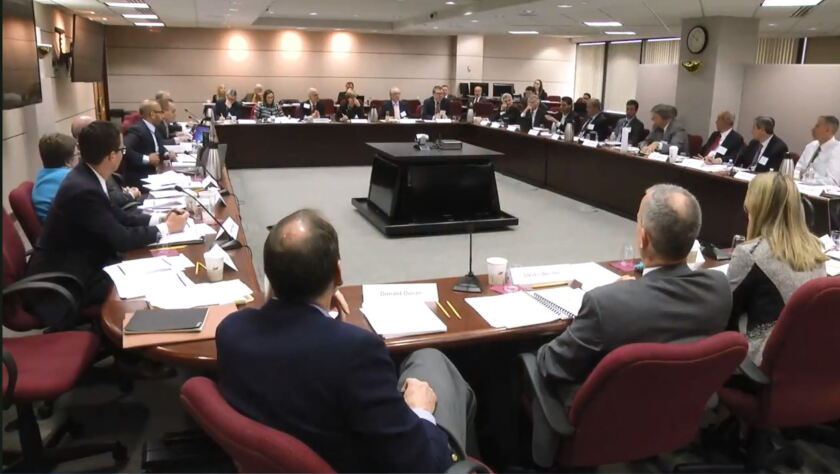
Photo from FASB video
The credit losses standard, commonly referred to as CECL because of the Current Expected Credit Loss model it uses, was originally set to take effect in January 2020 for SEC filers, except for smaller reporting companies, which are supposed to begin implementing it in January 2021. The changes would push back the dates for smaller reporting companies and all other public business entities from January 2021 to January 2023, and for private companies and nonprofits from January 2021 to January 2023.
The insurance contracts standard would be delayed for both public and private companies, as well as for nonprofits. The deferral moves the effective date for SEC filers from January 2021 to January 2022. Other public business entities, including smaller reporting companies, would see the effective date move from January 2021 to January 2024. For private companies and nonprofits, the effective date would move from January 2022 to January 2024.
Smaller reporting companies are defined as those with a public float of less than $250 million; or annual revenue of less than $100 million and either no public float or a public float of less than $700 million.
FASB expects to issue a final accounting standards update containing these decisions in mid-November.
The lease accounting standard change will be especially helpful, according to one expert.
“The delay by the FASB for adoption date requirements for private companies is intended to allow companies ample time to deal with the complexities of transition to ASC 842,” said Mike Stevenson, partner and leader of the Accounting and Reporting Advisory Group at BDO USA, in a statement. “If we learned anything from working with public companies on their lease accounting implementation, it’s that we can’t underestimate this undertaking. Simply identifying and reclassifying current lease commitments — including embedded leases — is a substantial time commitment. It imperative that companies spend the time now to identify the right project management, staff involvement and technology to avoid any unforeseen issues as well as the increased costs of implementation caused by waiting until the last moment.”